Arbeidsmiljøloven §3-2 (Norwegian Working Environment Act) · Updated October 2026
Online first aid course for the workplace
Learn CPR, defibrillator use and how to handle acute injuries per the Norwegian Resuscitation Council guidelines, in under 90 minutes. Passing issues a numbered certificate the same day, documenting the theoretical part of the training. Hands-on CPR practice comes on top.
- Duration
- about 90 minutes
- Language
- Norwegian & English
- Kursbevis
- Yes, included
- Price
- NOK 790 per seat
The whole course is free to take. No account needed to start. After you pass the exam you get your certificate through the course.
Certificate · First aid
HMS-2026-000481
Awarded to
Kari Nordmann
Employee · Eksempelbedrift AS · Trondheim
Issued
23 April 2026
Exam
96 % (70 % pass mark)
Scan to verify, or visit
hmslederkurs.no/kursbevis/eksempel
Sample certificate. Real format, fictional name. Open the full version.
In short
The employer must make sure employees receive the training, practice and instruction that is necessary (Working Environment Act section 3-2), and where first aid equipment is to be used, training, and practice where needed, must be given in its use (regulation on organisation, management and employee participation section 8-1). Suitable first aid equipment must be readily available wherever working conditions make it necessary (workplace regulation section 3-10), and the Labour Inspection Authority recommends that every workplace always has first aiders who receive regular training, preferably every 1 to 1.5 years. This first aid course gives the documented theory training in under 90 minutes, with a numbered certificate the same day you pass. Hands-on CPR practice on a manikin comes on top.
- Who
- All employees, managers and designated first aiders
- Legal basis
- Arbeidsmiljøloven §3-2
- Last updated
Free to take
pay NOK 790 when you pass
about 90 minutes
done in one sitting
Real people
answer when you have a question
Same day
certificate in inbox
How you get it done
Three steps. No classroom, no travel time.
Start for free
Press start and the course opens in your browser. No payment, no account, no install. If you want to pause and continue on another device, you can leave your email along the way. Questions? A human replies by email as soon as we can.
Learn life-saving first aid in six short lessons
You work through six content lessons with short quizzes along the way: scene assessment and alerting, CPR and defibrillator use, acute injuries and illness, plus risk, equipment and documentation at your own workplace. Everything is mobile-friendly and can be done in one sitting. An instructor answers questions as soon as we can.
Pay at the end and get your certificate
Once you pass, you pay and your certificate is issued right away. You pay by card, and companies can get an invoice against their org number on request. A numbered, QR-verified PDF is sent to your email the same day, ready to attach to a reply to an order or file in the HR folder.
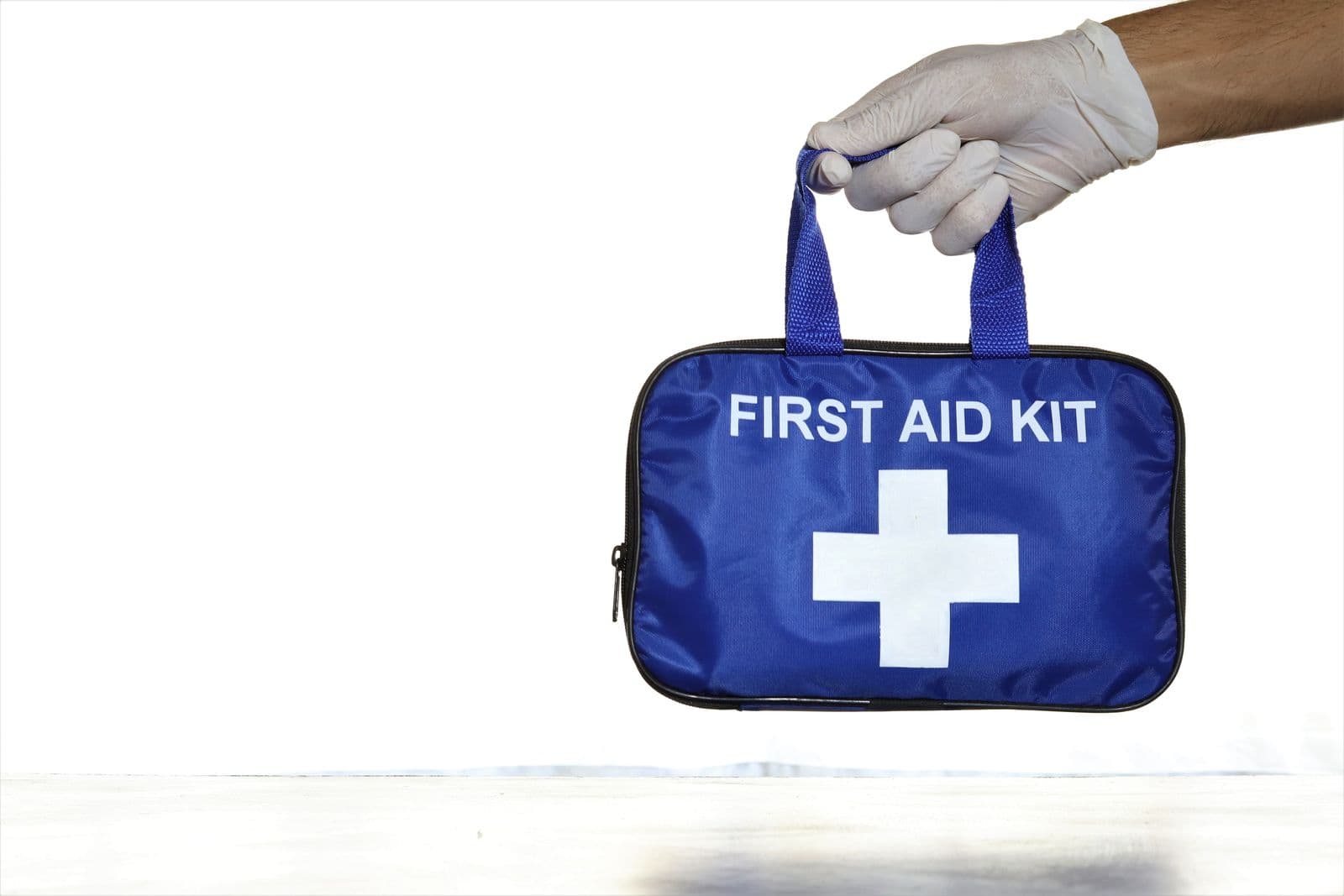
First aid when seconds count.
The first minutes before the emergency services arrive are decisive. This course gives the documented theory training your employer must provide. Hands-on CPR practice is recommended in addition.
See for yourself
Contents: CPR, defibrillator use and acute injuries
See what a lesson looks like. Each lesson combines clear text, legal references to lovdata, a practical checklist and a short knowledge check, so you both understand and remember what actually saves lives.
- A lovdata link in every module, so you can verify every claim
- Skim-reading is fine, no time gates on pages
- A short knowledge check at the end of every module
6 modules in the course
Each module links directly to lovdata.no and the Labour Inspection Authority's guidance.
How the course is built. Open a module to see what it covers and which statutory provisions it rests on.
01First aid at work and what the law requires
The module explains why the first minutes before the ambulance arrives decide the outcome, and where the duty sits: Working Environment Act section 3-2 requires necessary training, practice and instruction, section 10-1 letter l of the regulation on organisation, management and employee participation requires suitable first aid equipment, and section 8-1 requires training, and practice where needed, in its use. You learn the difference between training (knowledge) and practice (skill), and why the course gives the first while hands-on CPR practice comes on top.
Legal basis:aml §3-2forskrift 1355 §8-1forskrift 1355 §10-1
02Assess the scene, make it safe and alert help
Your own safety first: cut the power, stop machinery and make the scene safe before you go in, then quickly assess what happened, how many are affected and whether they are awake. You learn the sequence check, shout, call, start, the three emergency numbers 113, 110 and 112, and what the emergency operator needs to know: where, what, how many and who is calling. The module also shows how the workplace makes known who the first aider is and where the marked equipment is.
Legal basis:arbeidsplassforskriften §3-10
03Unresponsiveness, CPR and using a defibrillator
The course's most important module follows the Norwegian Resuscitation Council's guidelines: 30 chest compressions and 2 rescue breaths, 5 to 6 cm depth, a rate of 100 to 120 per minute, and a defibrillator attached as soon as possible. You learn to tell normal breathing from agonal gasping, when to use the recovery position, and the adaptation for children and infants with 5 initial rescue breaths. The module says plainly that theory does not build muscle memory, so hands-on manikin practice is recommended on top.
Legal basis:Norsk Resuscitasjonsråd: retningslinjer 2026
04Acute injuries and illness at work
The module covers what most often happens at work: life-threatening bleeding (direct pressure, elevation, pressure bandage), shock, burns cooled with slightly cool, not ice-cold, water for about 20 minutes, and suspected neck or back injury, where the person is not moved unnecessarily. You learn to recognise a heart attack, a stroke (speak, smile, lift) and anaphylaxis, and to help someone who is choking per the NRR 2026 poster: call 113 and alternate 5 back blows and 5 abdominal thrusts. For chemical burns you find the first aid advice in the safety data sheet, which the Labour Inspection Authority says must contain it.
Legal basis:NRR: Fremmedlegeme som blokkerer luftveien 2026Arbeidstilsynet: Førstehjelpsutstyr
05Risk, equipment and preparedness at your workplace
Preparedness must match the risk: the Labour Inspection Authority says first aid equipment is adapted to the type of work, the size of the workplace, where the work takes place and the number of employees, and workplace regulation section 3-10 requires a first aid room where size, type of work and accident risk make it necessary. You go through what a first aid kit should contain, how a defibrillator is placed, marked and maintained, and how designated first aiders make sure someone can help on every shift. Electrical personnel have their own rule: DSB's guidance on FSE section 7 says first aid training is given yearly, with no more than 12 months between sessions.
Legal basis:arbeidsplassforskriften §3-10Arbeidstilsynet: FørstehjelpsutstyrDSB: veiledning til FSE §7
06Documentation, refreshers and hands-on practice
The certificate is numbered, can be verified by QR code and documents that the theoretical first aid training is complete; it belongs in the HSE file together with the written risk assessment (internal control regulation section 5), the equipment list and the practice plan. There is no general statutory expiry date, but section 8-1 says training must be repeated when necessary, and the Labour Inspection Authority recommends regular training for first aiders, preferably every 1 to 1.5 years. The module ends with a plan for local hands-on CPR practice on a manikin.
Legal basis:internkontrollforskriften §5forskrift 1355 §8-1Arbeidstilsynet: Førstehjelpsutstyr
Legal basis and sources
The course is built on these sources. The links go to the statute or to the supervisory authority's own guidance, so you can read the requirement yourself.
- Arbeidsmiljøloven §3-2
The employer must inform employees of accident and health hazards in the work and give the training, practice and instruction that is necessary.
- Forskrift om organisering, ledelse og medvirkning §8-1
Where first aid equipment is to be used, training, and practice where needed, must be given in its use. The training must be repeated when necessary.
- Forskrift om organisering, ledelse og medvirkning §10-1 bokstav l
Suitable first aid equipment must be available wherever working conditions make it necessary.
- Arbeidsplassforskriften §3-10
First aid equipment must be readily available and marked, and larger or higher-risk workplaces may need a dedicated first aid room.
- Arbeidstilsynet: Førstehjelpsutstyr
The employer must provide training and practice in using the equipment, and there should always be first aiders with regular training, preferably every 1 to 1.5 years.
- DSB: veiledning til FSE §7
For electrical personnel, first aid training must be given yearly, with no more than 12 months between sessions.
Your certificate, same day
A quick, documented path to your certificate.
You take the course, pass the exam, and have a numbered, QR-verified certificate in your inbox the same day. Ready to show the Labour Inspection Authority, HR, or an auditor.
Pass it in the same session
You take the exam right after the last lesson, see the result immediately, and can retry free if you fail. No examiner queue, no waiting for post. 70 % pass mark.
Questions along the way? We answer
If something is unclear while you take the course, send us a message right from the course. A real person reads it and answers as soon as we can.
QR-verified in seconds
Every certificate has a unique number (HMS-YYYY-NNNNNN) and a QR code. HR, an auditor or the Labour Inspection Authority can scan and confirm it directly against our register.
Grounded in law, kept current
Every module links directly to lovdata and the Labour Inspection Authority's guidance, so you can verify every claim yourself. Updated whenever the regulations change.
Who wrote this course
The course is developed and maintained in-house by HMS Lederkurs, grounded in current law and regulation and the Labour Inspection Authority's guidance.
Every lesson links directly to lovdata.no and the Labour Inspection Authority's guidance, so you can verify every claim yourself. The content is updated when the rules change. The certificate documents the completed training, its content and its legal basis.
This is what your certificate looks like
Numbered HMS-2026-NNNNNN. QR-verified. Send it to your employer, HR or the Labour Inspection Authority. They can scan and confirm it directly against our register.
Open the example certificatePrice
Start free, pay when you pass
No upfront payment. You pay only after you have taken the course and passed the exam.
NOK790
Free to take. You pay when you pass. No VAT (mval §3-5)
- The whole course and exam are free to take
- Certificate with QR verification, pay only when you pass
- Real people answer your questions along the way
- Free retake if you fail
The whole course is free to take. No account needed to start. After you pass the exam you get your certificate through the course.
Volume discount for companies
Published prices, no negotiation rounds.
- 1 seat
- NOK 790per seat
- 5+ seats
- NOK 590per seat
- 20+ seats
- NOK 490per seat
- 100+ seats
- Contact us
Org-number invoicing for 5+ seats, EHF on request. See team setup →
Frequently asked questions
Is this course approved or certified?
No. There is no government approval or certification scheme for first aid courses in Norway. Our course is documented theory training: the certificate documents the theoretical part of first aid training. The training and practice the employer must give under Working Environment Act section 3-2 must also cover the business's own emergency preparedness, and hands-on CPR practice on a manikin comes on top.
Does the online course replace hands-on CPR practice?
No. The online course gives the theoretical training and documents it, but CPR is a physical skill that needs muscle memory. Section 8-1 of the regulation on organisation, management and employee participation requires training, and practice where needed, in the use of first aid equipment, and the Labour Inspection Authority writes that the employer must provide training and practice. We therefore recommend hands-on manikin practice on top, preferably locally at the workplace.
Which CPR guidelines does the content follow?
The content follows the Norwegian Resuscitation Council (NRR) current guidelines from 2026: 30 chest compressions and 2 rescue breaths, 5 to 6 cm depth, rate 100 to 120 per minute, call 113 on speaker as soon as the person does not respond, and a defibrillator attached as soon as possible. We also cover the adaptation for children and infants, and choking per the NRR 2026 poster.
How often must first aid training be refreshed?
There is no general statutory expiry date. Section 8-1 of the regulation on organisation, management and employee participation says training must be repeated when necessary, and the Labour Inspection Authority recommends that first aiders receive regular training, preferably every 1 to 1.5 years. Electrical personnel have their own rule: DSB's guidance on FSE section 7 says first aid training must be given yearly, with no more than 12 months between sessions.
Who should take the course?
The course suits all employees, managers and designated first aiders in Norwegian workplaces. The employer has a statutory duty to provide necessary training, and it is good practice to always have at least one person with first aid competence present on each shift. Per-seat pricing makes it easy to train the whole team.
What does the course cost, and can we buy for several employees?
The course costs 790 NOK per seat. We publish a volume scale: 590 NOK per seat from 5 seats, 490 NOK per seat from 20 seats, and a custom price from 100 seats. Businesses can enter their organisation number at checkout. You pay only at the end, once you have passed, for access to the guided course with the certificate included.
Is first aid training mandatory at work?
The law does not use the words first aid course, but the duty behind it is real. The employer must give the training, practice and instruction that is necessary (Working Environment Act section 3-2), and where first aid equipment is to be used, training, and practice where needed, must be given in its use (regulation on organisation, management and employee participation section 8-1). How much is needed depends on the type of work, size and risk, and the Labour Inspection Authority recommends that every workplace always has first aiders who receive regular training.
Read more (in Norwegian): is first aid training mandatory? →
Putting the whole team through?
Published volume discount from 5 seats, card payment and invoice against org number on request. HR dashboard for progress tracking and bulk certificate downloads.
Background reading
Background reading on what the law requires, before you start.
How often must you renew workplace first aid?
No fixed statutory interval for most, but a refresher every 12 to 18 months is advised.
Is workplace first aid training mandatory?
The law requires training and preparedness matched to the risk, not a specific course.
How to document HMS training (with an example certificate)
Field by field: what the certificate must contain, where to file it, and how verification works.
Other courses in the catalogue
Related courses for the same workplace.
Get your workplace ready to save lives
Start for free, take the whole course, and pay only once you have passed. If you fail, you can try again at no extra cost.
Updated 2026 · VAT-exempt (mval §3-5) · Lovdata-linked in every topic
Tell us what you think
When you have finished, we appreciate an honest Trustpilot review, so the next participant knows what to expect.