Forskrift om utførelse av arbeid §3-4 (Regulations concerning the Performance of Work) · Updated October 2026
Chemicals course: the chemical register, safety data sheets and safe use
Learn to read safety data sheets and CLP labels, use the chemical register and handle chemicals safely. Documented theory training that gives the general part of the training; training on your own chemicals under the regulation on the performance of work section 3-4 comes in addition. Start free, pay only when you pass, and get your certificate the same day.
- Duration
- about 90 minutes
- Language
- Norwegian & English
- Kursbevis
- Yes, included
- Price
- NOK 990 per seat
The whole course is free to take. No account needed to start. After you pass the exam you get your certificate through the course.
Certificate · Chemicals
HMS-2026-000481
Awarded to
Kari Nordmann
Skilled worker · Eksempelbedrift AS · Trondheim
Issued
23 April 2026
Exam
96 % (70 % pass mark)
Scan to verify, or visit
hmslederkurs.no/kursbevis/eksempel
Sample certificate. Real format, fictional name. Open the full version.
In short
Employers must keep a chemical register for hazardous chemicals that can harm health, set up before the chemicals are used or stored (regulation on the performance of work section 2-1). Workers must have easy access to it (section 2-4). Under section 3-4 both the worker and the safety representative must be trained in, among other things, the chemicals' risks, use of the register and the necessary protective measures. This course is documented theory training that gives the general, theoretical part in about an hour and a half, with a certificate the same day. Training in the business's own chemicals and equipment is given by the employer in addition.
- Who
- Workers and safety representatives in industry, construction, cleaning, workshops and labs
- Legal basis
- Forskrift om utførelse av arbeid §3-4
- Last updated
Free to take
pay NOK 990 when you pass
about 90 minutes
done in one sitting
Real people
answer when you have a question
Same day
certificate in inbox
How you get it done
Three steps. No classroom, no travel time.
Start for free
Press start and the course opens in your browser. No payment, no account, no install. If you want to pause and continue on another device, you can leave your email along the way. Questions? A human replies by email as soon as we can.
Take the course at your own pace
Eight short lessons take you through chemical health hazards, safety data sheets, CLP hazard labelling, the chemical register, risk assessment, safe handling and protective equipment, emergency response and waste, and the employer's training duty. Each lesson has a short knowledge check along the way. Mobile-friendly, and you can pause and continue where you left off.
Pay at the end and get your certificate
Once you pass, you pay and your certificate is issued right away. You pay by card, and companies can get an invoice against their org number on request. A numbered, QR-verified PDF is sent to your email the same day, ready to attach to a reply to an order or file in the HR folder.
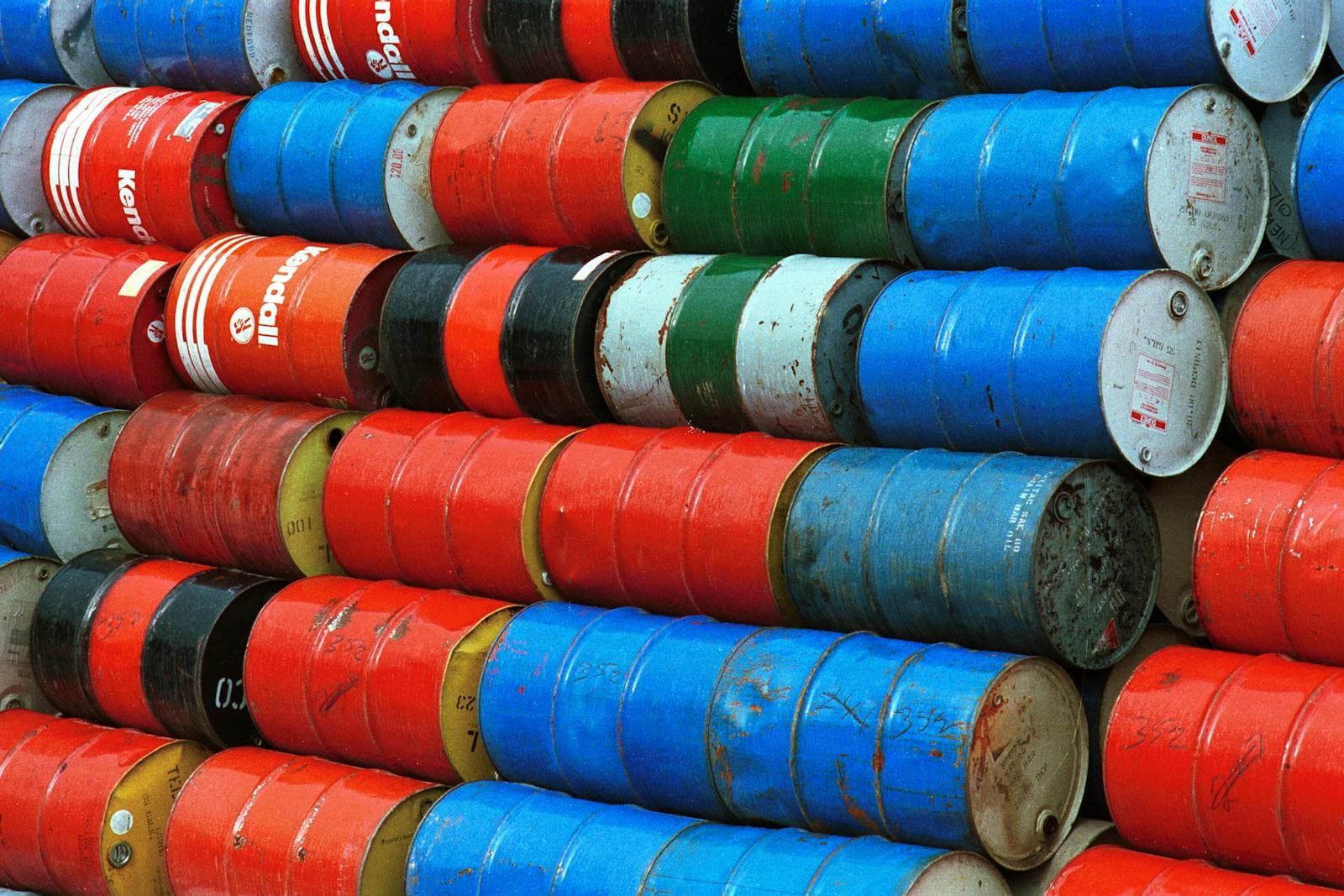
Safe chemical handling at work.
The safety-data-sheet register, SDSs and hazard labelling, explained for the people who actually use the chemicals. Gives the general theory, with a certificate; training on your own chemicals and equipment under the work-performance regulation §3-4 comes in addition.
See for yourself
Contents: safety data sheets, hazard labels and the chemical register
See what a lesson looks like. Plain language, concrete examples from industry, construction, cleaning, workshops and labs, and references to lovdata you can look up yourself. You read the whole course for free before you optionally pay, certificate included.
- A lovdata link in every module, so you can verify every claim
- Skim-reading is fine, no time gates on pages
- A short knowledge check at the end of every module
8 modules in the course
Each module links directly to lovdata.no and the Labour Inspection Authority's guidance.
How the course is built. Open a module to see what it covers and which statutory provisions it rests on.
01Chemical health hazards and the regulatory framework
The module gives you the map: what chemical health hazards are, the difference between acute and chronic effects, and the three ways substances enter the body, inhalation, skin and eyes, and ingestion. You see why the rules apply in cleaning, construction, workshops and labs, not just the chemical industry, and who is responsible: employer, worker and safety representative. It also frames the course as theory training.
Legal basis:Forskrift om utførelse av arbeid
02Safety data sheets (SDS)
The safety data sheet is the single most important document for safe use. It must be in Norwegian, have 16 fixed sections, and the supplier must make it available. You learn to find answers fast: section 2 for hazards, 4 for first aid, 7 for storage, 8 for protective equipment and 13 for disposal.
Legal basis:Arbeidstilsynet: sikkerhetsdatablad
03CLP hazard labelling: pictograms, H- and P-statements
The module teaches you to read the hazard labelling on packaging: the nine red and white hazard pictograms, the signal words "Danger" and "Warning", and the H- and P-statements that describe the hazard and the precaution. You learn a fixed order, pictogram, hazard, precaution, and why old orange labels are a warning sign. Classification and labelling are the supplier's duty; you learn to read them, not to make them.
04The chemical register: requirements, use and access
Here you go through the requirements in chapter 2 of the regulation on the performance of work: the register must be set up before hazardous chemicals are used (section 2-1), be in Norwegian and kept current (2-2), be used when risks are assessed and instructions written (2-3), and be easily accessible where the work happens (2-4). You learn what that means for a digital register, and the mistakes inspections often find.
05Risk assessment of chemical health hazards
Under section 3-1 the employer must map and document the chemicals and assess any risk, based on hazardous properties, quantity, exposure and limit values among other things. You learn that risk is hazard combined with exposure, and the hierarchy of controls: substitute hazardous substances where possible (Working Environment Act section 4-5(2)), then technical and organisational measures, and protective equipment last. The specific assessment must be made by the business itself.
06Safe handling, storage and protective equipment
Chemicals must be handled and stored in a fully sound way so that harm to health, fire, explosion and other accidents are avoided (section 3-7). In practice that includes keeping them labelled, closed and with incompatible substances apart. Section 3-8 puts the measures in priority order, with personal protective equipment after technical and collective measures. You learn to choose the right gloves, eye and respiratory protection from the safety data sheet, and why the wrong equipment can give false security.
07First aid, spills, emergency response and hazardous waste
The module covers the first minutes when something goes wrong: first aid for splashes to the eyes or skin, inhalation and swallowing, and safe handling of spills. Where accidents can happen, the employer must have an emergency plan that is known and practised regularly (section 3-15). You also learn that chemical residues are often hazardous waste, and that waste containing carcinogenic or mutagenic chemicals must be collected in closed, clearly labelled containers and destroyed safely or delivered to an approved reception facility (section 3-16).
08The employer's training duty and documentation
The closing module ties it together: section 3-4 requires training of both the worker and the safety representative on points a to f, and the training must be repeated regularly when working with carcinogenic, mutagenic or reprotoxic chemicals. Section 3-5 adds ongoing information. You see exactly what the course gives, the general theory, and which part the employer must give locally.
Legal basis and sources
The course is built on these sources. The links go to the statute or to the supervisory authority's own guidance, so you can read the requirement yourself.
- Forskrift om utførelse av arbeid §3-4
Workers and the safety representative must be trained on the chemicals, the register, the risk assessment, equipment, protective measures and emergencies.
- Forskrift om utførelse av arbeid §2-1
A chemical register is required for hazardous chemicals that can harm health, set up before the chemicals are used.
- Forskrift om utførelse av arbeid §2-2 til §2-4
The register must be in Norwegian and kept up to date, used in risk assessment and instructions, and easily accessible to workers.
- Forskrift om utførelse av arbeid §3-1
The employer must map and document the chemicals and assess any risk to health and safety.
- Forskrift om utførelse av arbeid §3-5
Workers and the safety representative must receive ongoing information about the risk and changes.
- Arbeidstilsynet: stoffkartotek
Who must have a chemical register, how to keep it current, and that workers must be trained to use it.
Your certificate, same day
A quick, documented path to your certificate.
You take the course, pass the exam, and have a numbered, QR-verified certificate in your inbox the same day. Ready to show the Labour Inspection Authority, HR, or an auditor.
Pass it in the same session
You take the exam right after the last lesson, see the result immediately, and can retry free if you fail. No examiner queue, no waiting for post. 70 % pass mark.
Questions along the way? We answer
If something is unclear while you take the course, send us a message right from the course. A real person reads it and answers as soon as we can.
QR-verified in seconds
Every certificate has a unique number (HMS-YYYY-NNNNNN) and a QR code. HR, an auditor or the Labour Inspection Authority can scan and confirm it directly against our register.
Grounded in law, kept current
Every module links directly to lovdata and the Labour Inspection Authority's guidance, so you can verify every claim yourself. Updated whenever the regulations change.
Who wrote this course
The course is developed and maintained in-house by HMS Lederkurs, grounded in current law and regulation and the Labour Inspection Authority's guidance.
Every lesson links directly to lovdata.no and the Labour Inspection Authority's guidance, so you can verify every claim yourself. The content is updated when the rules change. The certificate documents the completed training, its content and its legal basis.
This is what your certificate looks like
Numbered HMS-2026-NNNNNN. QR-verified. Send it to your employer, HR or the Labour Inspection Authority. They can scan and confirm it directly against our register.
Open the example certificatePrice
Start free, pay when you pass
No upfront payment. You pay only after you have taken the course and passed the exam.
NOK990
Free to take. You pay when you pass. No VAT (mval §3-5)
- The whole course and exam are free to take
- Certificate with QR verification, pay only when you pass
- Real people answer your questions along the way
- Free retake if you fail
The whole course is free to take. No account needed to start. After you pass the exam you get your certificate through the course.
Volume discount for companies
Published prices, no negotiation rounds.
- 1 seat
- NOK 990per seat
- 5+ seats
- NOK 790per seat
- 20+ seats
- NOK 590per seat
- 100+ seats
- Contact us
Org-number invoicing for 5+ seats, EHF on request. See team setup →
Frequently asked questions
Is the course approved or certified by the Labour Inspection Authority or the Environment Agency?
No. There is no public approval scheme for chemical and chemical-register courses. The course is documented theory training that gives the general part of the training in chemical work. Training under the regulation on work execution section 3-4 must also cover the business's own chemicals, and the employer provides that in addition. The certificate is documentation of completed training, not a public certificate of competence or license.
Does the course replace the business's own risk assessment and chemical register?
No. The course gives the theory and the method, but does not replace the business's own risk assessment under section 3-1, the specific chemical register and the product-specific safety data sheets at the workplace, or the workplace- and equipment-specific training. The employer must provide the local, chemical-specific part in addition.
Who is the course for?
For workers and safety representatives in industry, construction, cleaning, workshops and labs, anyone who uses or may come into contact with hazardous chemicals. Under section 3-4 both the worker and the safety representative shall receive this training.
How long does the course take, and can I take it on mobile?
The course is built to be completed in around an hour and a half, across eight short lessons with knowledge checks along the way and a final test. It is mobile-friendly, and you can pause and continue where you left off.
What does it cost, and when do I pay?
You take the whole course for free and pay only at the end, once you have passed, for access to the guided course with the certificate included. The price is 990 kroner per participant, with volume discounts for multiple seats. Access to the guided course with certificate is exempt from VAT under the Value Added Tax Act section 3-5.
Does the course cover asbestos, isocyanates or other substances with their own rules?
The course gives general theory on chemical health hazards and does not cover certified or practical training where other rules require it, for example asbestos, spray painting with isocyanates, hot work or gas measurement. Such training must be provided under the specific rules that apply to each area.
Does every business need a chemical register?
Every employer that produces, packs, uses or stores chemicals hazardous to health must have a chemical register, as the Labour Inspection Authority describes it. The duty follows from section 2-1 of the regulation on the performance of work, and the register must exist before the chemicals are used. That includes everyday products such as cleaning agents, glue and paint when they are hazardous chemicals.
How often must chemicals training be repeated?
The regulation sets no fixed interval for everyone. Where there is a risk of exposure to carcinogenic, mutagenic or reprotoxic chemicals, the training must be repeated regularly (section 3-4). The training also covers significant changes to the risk assessment, and section 3-5 requires ongoing information. New chemicals, new processes and new staff are therefore natural points for new training.
Putting the whole team through?
Published volume discount from 5 seats, card payment and invoice against org number on request. HR dashboard for progress tracking and bulk certificate downloads.
Background reading
Background reading on what the law requires, before you start.
Stoffkartotek: krav til arbeidsgiver
Hva et stoffkartotek er, hvem som må ha det, hva det skal inneholde, og hvordan det brukes i risikovurdering og opplæring.
Risikovurdering mal: HMS for små bedrifter
Hva en lovlig risikovurdering må inneholde, hvordan en enkel matrise ser ut, og når den må oppdateres.
How to document HMS training (with an example certificate)
Field by field: what the certificate must contain, where to file it, and how verification works.
Other courses in the catalogue
Related courses for the same workplace.
Ready to handle chemicals more safely?
Start for free, take the whole course, and pay only once you have passed. If you fail, you can try again at no extra cost.
Updated 2026 · VAT-exempt (mval §3-5) · Lovdata-linked in every topic
Tell us what you think
When you have finished, we appreciate an honest Trustpilot review, so the next participant knows what to expect.